
Metrology Software for Modern Calibration Laboratories
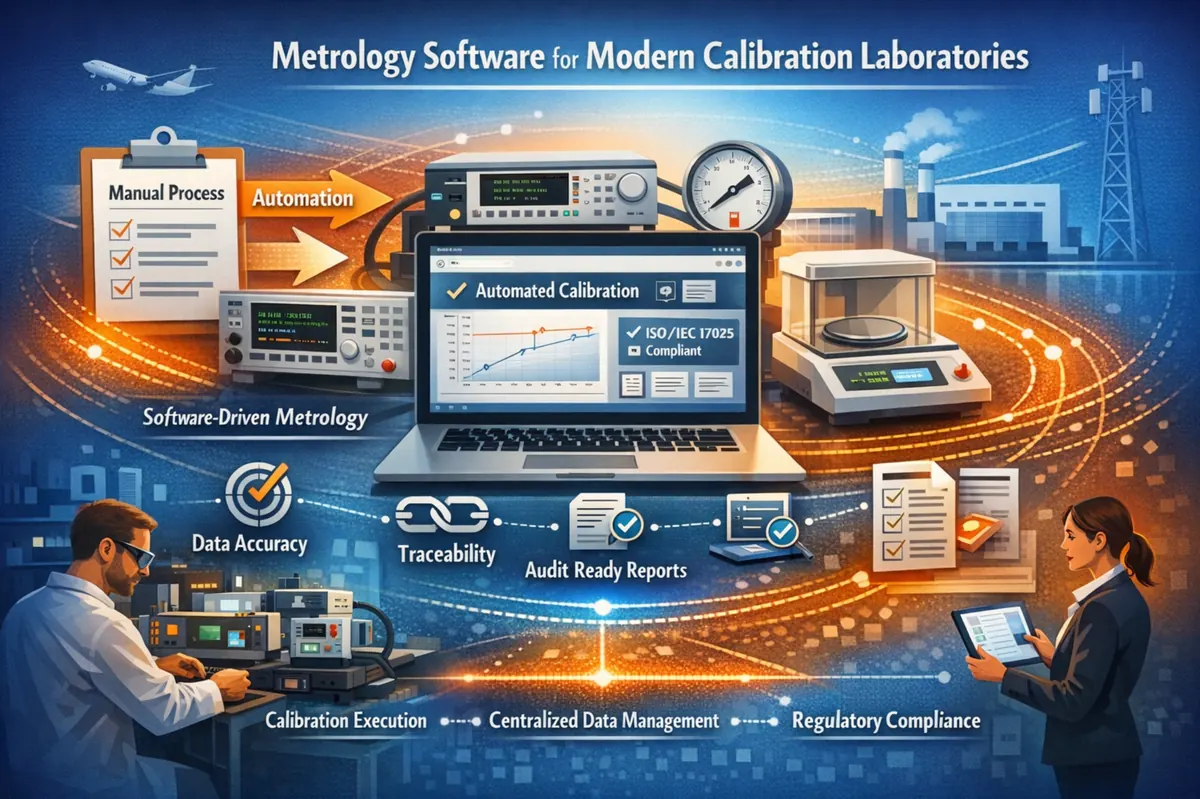
Metrology software is at the core of modern measurement science, enabling calibration laboratories to achieve consistent accuracy, traceability, and regulatory compliance in increasingly complex calibration environments. As measurement tolerances tighten and audit expectations grow, laboratories can no longer rely on fragmented tools or manual processes. Software-driven metrology systems now provide the structure and control required to manage calibration execution, data capture, and reporting with higher precision and confidence.
Modern laboratories operate across diverse industries such as aerospace, electronics, manufacturing, pharmaceuticals, and energy, where measurement integrity directly impacts safety, quality, and compliance. In this context, metrology software acts as a foundational layer that ensures measurements are repeatable, defensible, and aligned with international standards.
Role of Software in Modern Metrology
In contemporary metrology laboratories, software functions as the central link between calibration instruments, documented procedures, and quality management systems. Metrology software ensures that calibration workflows are executed consistently, measurement data is captured accurately, and results are stored in a structured and traceable digital format. This integration significantly reduces manual intervention while supporting reliable and repeatable measurement outcomes.
By controlling calibration sequences through predefined logic, metrology software minimizes variations caused by individual techniques or interpretation. Laboratories benefit from improved operational transparency, easier data retrieval, and stronger confidence in reported results across different technicians, shifts, and locations.
Manual vs Software-Driven Metrology
Traditional metrology workflows rely heavily on manual execution, paper-based records, and technician experience. While this approach may be sufficient for low-volume or highly specialized applications, it often introduces inefficiencies and variability as laboratories scale. Manual data entry, spreadsheet-based calculations, and fragmented documentation increase the risk of errors and make audits more time-consuming.
Software-driven metrology replaces these manual steps with controlled digital workflows. By enforcing validated methods and automating key execution steps, metrology software improves repeatability and reduces technician-to-technician differences. Automated data capture and reporting further enhance measurement reliability while lowering administrative overhead.
Core Features of Metrology Software
Effective metrology software includes a range of capabilities designed to support both technical accuracy and regulatory compliance. Common features include automated calibration execution, direct instrument communication, centralized data management, uncertainty calculation support, and standardized reporting. Together, these capabilities help laboratories maintain consistent measurement quality while improving throughput.
Additionally, modern platforms often support version-controlled procedures, audit trails, and historical data access. These features allow laboratories to demonstrate procedural control, track performance trends, and respond quickly to customer or auditor inquiries.
ISO/IEC 17025 and Metrology Software
Compliance with ISO/IEC 17025 requires laboratories to demonstrate controlled procedures, traceable measurements, and reliable documentation. Meeting these requirements consistently can be challenging without software support. Metrology software assists by enforcing approved workflows, maintaining complete calibration histories, and generating audit-ready records that align with accreditation expectations.
By reducing procedural variability and manual documentation effort, software-driven metrology simplifies audit preparation and helps laboratories maintain ongoing compliance. This structured approach also lowers the risk of nonconformities and supports long-term accreditation confidence.
Why Laboratories Are Moving Toward Automation
Laboratories across industries are increasingly adopting software-based metrology to meet rising demands for speed, accuracy, and scalability. Automation enables laboratories to process higher instrument volumes, reduce turnaround times, and maintain consistent quality without increasing operational risk or staffing levels.
As competition intensifies within the calibration industry, software-driven metrology provides a strategic advantage. Laboratories that invest in modern metrology software are better equipped to adapt to evolving standards, customer expectations, and future growth requirements.
Conclusion
Metrology software has become essential for calibration laboratories seeking to maintain accuracy, compliance, and operational efficiency in a rapidly evolving measurement landscape. By integrating calibration execution, data management, and reporting into a unified system, laboratories can achieve greater confidence in their results, reduce risk, and prepare for sustainable growth. As measurement demands continue to increase, software-driven metrology will remain a critical component of modern laboratory operations.
To see how our automated metrology software is implemented , visit our automated calibration software platform.